REVIEW · NGONG PING VILLAGE
Premium Lantau Tour with Cable Car tickets & English Guide
Book on GetYourGuide →Operated by Odessyaura Tours and Travel · Bookable on GetYourGuide
Glass-bottom cable rides beat the usual bus trip. This private Lantau tour pairs Crystal Cabin round-trip tickets with an English guide and a real shot at the Big Buddha experience, plus stress-free hotel transport from Kowloon. I love the panoramic ride through Tung Chung Bay from the glass-bottom floor, and I also like how the guide helps you make sense of what you’re seeing as you tackle the 268 steps. One thing to consider: the outlet mall stop at the end may feel like a shopping errand if your priority is temples only.
The payoff is a day that runs on your schedule, not Hong Kong public transport chaos. I also like that you get door-to-door pickup around 9:30 AM, then a clear, guided flow through Ngong Ping Village, the monastery area, and back to your hotel. If you’re the type who hates waiting for cable car lines or wants zero queue time, it’s smart to plan for some on-site standing time even with tickets.
In This Review
- Key things to know before you go
- Door-to-door pickup from Kowloon, without the planning headache
- Crystal Cabin cable car: glass-bottom views over Tung Chung Bay
- Ngong Ping Village as your starting point, not just a waypoint
- The Big Buddha: 268 steps, 34 meters tall, and a long view reward
- Po Lin Monastery: calm temples and time to take it at your pace
- Outlet mall time: a practical shopping stop, not the main attraction
- Timing reality: 6 hours on paper, shorter in real life
- Price and value: what you’re truly paying for at $246 per person
- Who this tour suits best (and who may want to skip)
- Should you book this Lantau day trip?
- FAQ
- What time is hotel pickup?
- How long is the tour?
- What cable car tickets are included?
- What do I get for the Big Buddha visit?
- Is Po Lin Monastery entry included?
- Where does the tour pick me up and drop me off?
- Do I need an ID or passport?
Key things to know before you go
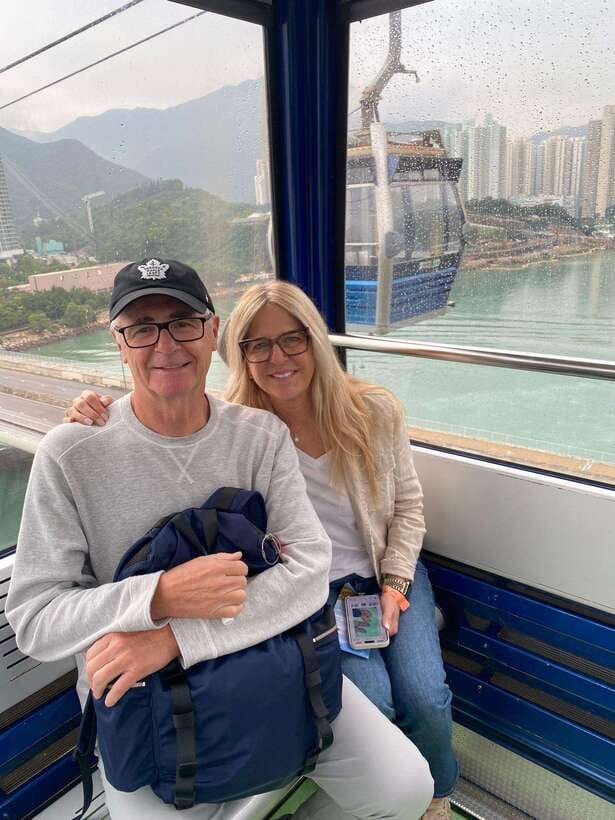
- Crystal Cabin round trip: You ride up and back with the glass-bottom floor experience included.
- Big Buddha climb is built in: Admission covers access to climb the 268 steps to the seated statue.
- Po Lin Monastery visit is guided: You get time at the temples and grounds, not just a quick photo stop.
- Outlet mall is part of the deal: Expect a time block for discounted international shopping.
- Hotel-to-hotel transport from Kowloon: Private transfers mean no juggling trains, buses, or taxis.
- Guide language is English: If your guide is Eva, you’ll likely get extra cultural context and upbeat pacing.
Door-to-door pickup from Kowloon, without the planning headache
Your day starts with pickup from a Kowloon hotel. The listed start is 9:30 AM, and the vehicle waits in front of your hotel. That detail sounds small, but it matters. Lantau can be confusing when you’re trying to coordinate buses, ferries, and the cable car timing. A private vehicle takes that mental load off your plate.
This is also why the tour feels “premium” even before you reach the first attraction. You’re paying for transportation plus a guide, not just tickets. In real terms, that means you can focus on the experience itself: the cable car views, the temple stops, and the climb up to the statue.
One practical point: your pickup and drop-off options are many (numerous Kowloon hotels are listed). So if your hotel is on the list, you’re likely to get a straightforward handoff with minimal confusion.
Crystal Cabin cable car: glass-bottom views over Tung Chung Bay
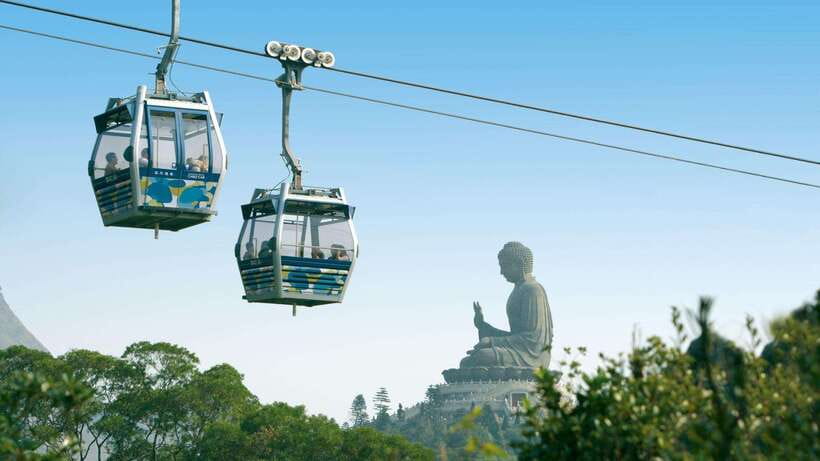
The first major moment is the cable car ride from Tung Chung toward Ngong Ping. You’re not just going for convenience—you’re going for the ride. With Crystal Cabin round-trip tickets, you get panoramic views through the glass-bottom floor, which adds a little adrenaline without being risky.
From a “make the most of it” perspective, this part of the tour is your best photo window. Once you reach ground level, it’s more about buildings, pathways, and the steps. On the cable car, you get a wider sense of where everything sits: the bay area, the hills, and the way Ngong Ping Village connects to the Big Buddha complex.
Timing is the only variable here. Cable car systems can have their rhythms depending on the day and crowd level. Even with tickets, you might still spend some time standing. The tour’s private structure helps because you’re not also managing lines, purchasing, and ticket confusion on top of it.
If you’re sensitive to heights, the glass-bottom floor might be a consideration. It’s not mandatory to look straight down the whole time, but the option is there. If you can handle a clear view below your feet for a few minutes, you’ll probably enjoy how different the ride feels compared to a standard gondola.
Ngong Ping Village as your starting point, not just a waypoint
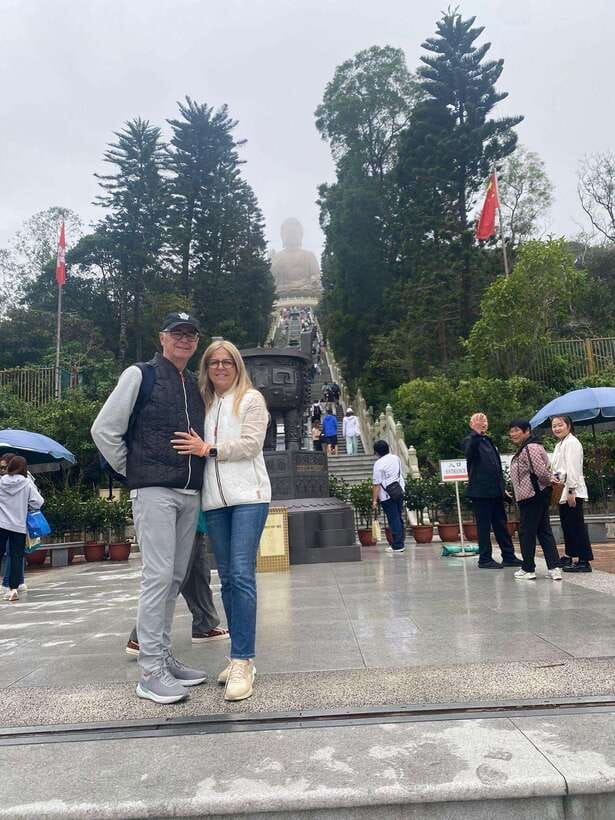
After the ride, you reach Ngong Ping Village. This is where the day shifts from transit mode into walking mode. It also helps you transition mentally: you’re no longer just traveling to Lantau—you’re entering the Big Buddha and monastery area.
The vibe at the village level tends to be active compared to the temples above. You’ll likely find shops and small stalls, which gives you a chance to grab water or snacks before the climb. I like this moment because it gives you a little breathing space. You can adjust your pace, take a quick look around, and figure out how you want to attack the steps.
If you come prepared, you’ll also avoid the small stress of realizing you forgot something after you’ve already started walking. Wear comfortable shoes. Bring a light layer if it’s cool or windy. You’ll appreciate it once you start climbing.
The Big Buddha: 268 steps, 34 meters tall, and a long view reward
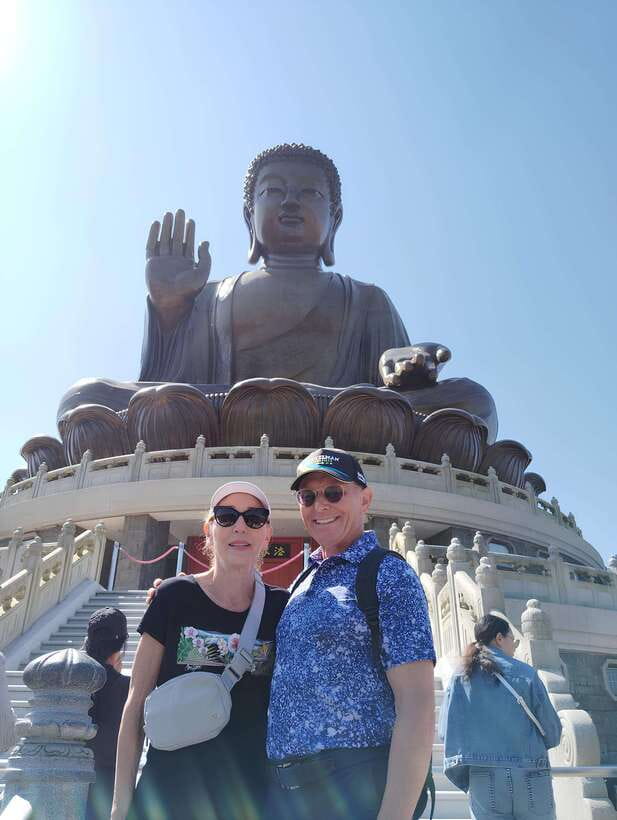
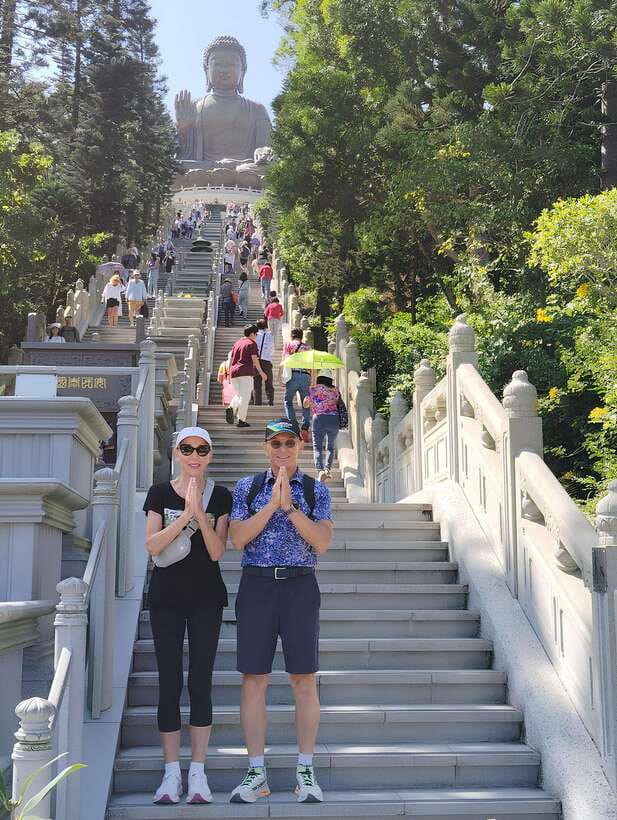
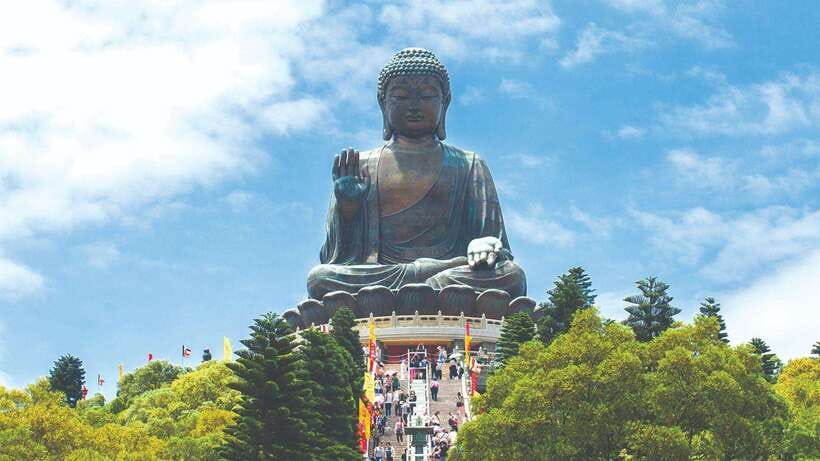
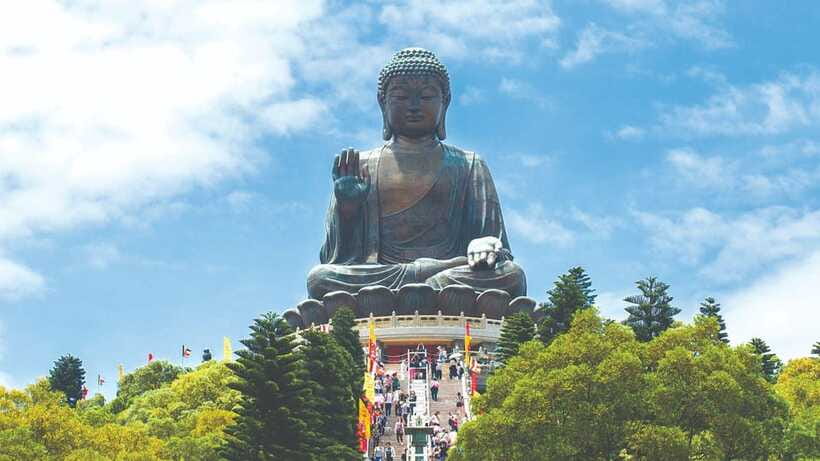
Then comes the main event: the Big Buddha, also known as Tian Tan Buddha. The statue is 34 meters tall, and it’s a bronze seated Buddha that’s among the largest of its kind. The included access lets you climb the 268 steps to reach the viewing area.
Here’s what I like most about this part: it’s a “work for the view” attraction. The climb forces you to slow down just enough to feel like you’re going somewhere meaningful, not just passing through. And once you reach the statue area, you’ll understand why it’s such a magnet for visitors.
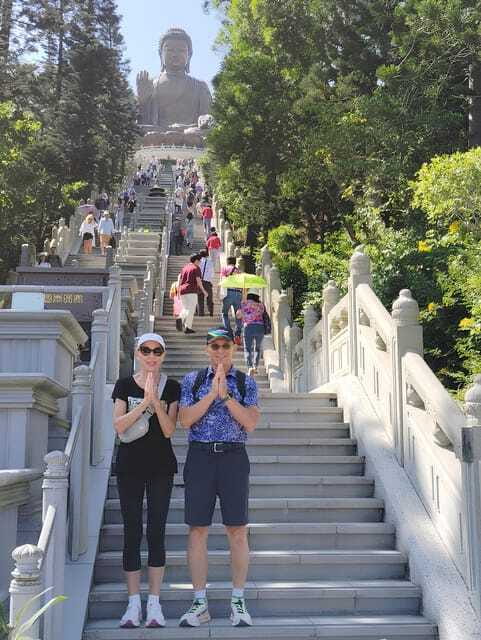
The steps themselves are straightforward: keep moving steadily, take breaks if you need them, and don’t rush the final approach. If you’re traveling with someone who gets tired easily, the private nature of the tour helps. You can adjust the pace without the pressure of a large group schedule.
A guide makes a difference here because the statue and surrounding features can feel like a maze if you don’t know what to look for. An English guide may share cultural background and fun details, like zodiac-related facts (one guide example shared the 12 Generals tied to Chinese year animals). Those kinds of notes make the setting feel less like sightseeing and more like a story you can follow.
Pro tip for your photos: the earlier parts of the approach tend to have more “environment” in the frame. Near the top, you’ll get more statue-focused shots. If you care about both, plan to take a few pictures during the approach, not only after you’ve reached the final viewpoint.
Po Lin Monastery: calm temples and time to take it at your pace
After Big Buddha, you head to Po Lin Monastery, described as a spiritual sanctuary in the mountains. You’ll have entry included and time to explore the temple grounds.
This is a different mood from the cable car and the steps. The area is quieter, with a focus on rituals and architecture rather than motion. The tour leaves space for you to walk, look around, and understand what you’re seeing at your own pace rather than being herded.
You may also find opportunities to participate in traditional Buddhist practices. The tour description notes that you might light incense as a symbol of prayer and respect. Even if you don’t participate, the choice to observe is part of the value: you’re not stuck in a one-size-fits-all checklist.
One more detail that matters: there’s mention of a vegetarian meal option at the monastery dining hall. I’d treat it as a good, low-pressure chance to try Buddhist vegetarian food, but whether you’ll actually eat there depends on your schedule and appetite that day. The tour’s pacing generally gives you time for the visit; the meal is your choice.
For many people, Po Lin Monastery is the part that makes the day feel more meaningful than the ride and the statue. The calm atmosphere gives you a reset after the physical effort of the steps.
Outlet mall time: a practical shopping stop, not the main attraction
After the monastery, the tour includes time at a nearby outlet mall. This is the part some people love and others skip. If you’re shopping for international brands at discounted prices, this stop can be genuinely useful.
But it’s also the easiest part of the day to question. The biggest weakness is that shopping is time-sensitive: you either like this kind of stop or you don’t. One tour example even noted that you can do the mall style experience elsewhere, so it’s not the reason to travel all the way to Lantau.
My advice: decide before you go. If you want a souvenir or a few clothes/accessories and you know your budget, this is a good place to spend time. If your goal is all temple and all views, consider using this time for a relaxed walk, a snack, and resetting before you head back to Hong Kong.
Timing reality: 6 hours on paper, shorter in real life
The experience is listed as 6 hours, with a return time around 3:30 PM. In real-world terms, the actual duration can vary based on how long you spend at each stop, plus any waiting time for the cable car.
There’s a useful takeaway from past experiences: some days may run closer to 4 hours if your group moves quickly and doesn’t linger at the monastery dining hall or shopping area. That doesn’t make it worse. If anything, it can feel efficient—especially if you’re trying to preserve your evening plans back in Kowloon.
Still, plan for flexibility. This is a private tour, so you aren’t stuck in a fixed bus schedule. But the attractions themselves have natural time requirements: the cable car ride, the climb, and time to appreciate the monastery grounds.
Price and value: what you’re truly paying for at $246 per person
At $246 per person, this tour isn’t “cheap.” But it’s also not just a ticket bundle. You’re paying for three big value drivers:
- Private round-trip transportation from your hotel in Kowloon, so you’re not coordinating multiple transit steps.
- Crystal Cabin round-trip tickets, including the glass-bottom experience, which is usually the headline activity.
- An English-speaking guide who helps you navigate, explain, and time your visit.
Then you add included access items like Big Buddha entry/access to the climb and Po Lin Monastery entry. If you were to piece this together yourself—transport, guide, and ticketing—you’d likely spend time and energy that you might prefer to spend on Lantau itself.
So the value question comes down to you. If you like temples and want a guided, low-stress day with minimal planning, the price can make sense. If you’re confident navigating independently and you don’t care about a guide, you might find cheaper options. But you’d be trading off convenience and context.
Who this tour suits best (and who may want to skip)
This private day trip fits best if:
- You want door-to-door pickup rather than transit puzzles.
- You care about the cable car experience with the glass-bottom floor.
- You like getting context while visiting major religious landmarks.
- You want a balanced day: steps, temples, and a bit of shopping.
It may be less ideal if:
- Your whole goal is maximum time at temples only.
- You’d rather spend more hours at Ngong Ping Village or around Lantau without the outlet mall block.
- You hate any walking beyond easy sightseeing.
For families and couples, the private format is a big plus. It lets you set a comfortable pace on the steps and decide how long to linger in the monastery area.
Should you book this Lantau day trip?
If you want a smooth, structured Lantau day with the big highlights done in the right order, I think this is a solid choice. The combination of Crystal Cabin (with the glass-bottom thrill), the Big Buddha climb, and the guided monastery stop makes the day feel complete without requiring you to map anything out.
I’d book it especially if you value convenience and you like having an English guide who can explain what you’re seeing. If the outlet mall stop sounds like a chore, you can still make the day work by treating shopping as optional time and keeping your focus on the cable car, the statue, and Po Lin Monastery.
Either way, wear comfortable shoes and plan for stairs. Then let the ride and the temples do what they do best: slow the day down.
FAQ
What time is hotel pickup?
Pickup is at 9:30 AM from your Kowloon hotel. The vehicle should be waiting in front of the hotel.
How long is the tour?
The duration is listed as 6 hours. Starting times can vary, so check availability.
What cable car tickets are included?
The tour includes round-trip Crystal Cabin cable car tickets, and the Crystal Cabin experience includes a glass-bottom floor.
What do I get for the Big Buddha visit?
You receive admission to the Big Buddha and access to climb the 268 steps to the statue.
Is Po Lin Monastery entry included?
Yes, entry to Po Lin Monastery is included, with time to explore the temple grounds.
Where does the tour pick me up and drop me off?
Pickup and drop-off are offered for many Kowloon hotel locations listed for this tour.
Do I need an ID or passport?
Yes. You should bring your passport or ID card.