REVIEW · HUE
Hue Luxury Group Tour- Hue Daily Small Group Tour
Book on Viator →Operated by Private Tours By Local Guides · Bookable on Viator
One day, and Hue makes sense fast. This Hue Daily Small Group Tour strings together the city’s big stories in a smart order: Thien Mu Pagoda, the Imperial City zones, Dong Ba Market, and two royal tombs. Two things I really like: the tight max group size of 12 (it stays calm and personal), and the way the guide connects what you’re seeing—like Thien Mu’s myths—to the architecture around you. In the reviews, I’ve seen guide names such as Trinh, Phi, and XI praised for clear, patient explanations in strong English.
The one thing to keep in mind is the day can run long. Even though it’s advertised around 7 to 8 hours, one review noted it ran about an hour more than expected, and there’s a lot of walking and photo time packed in.
In This Review
- Key things that make this tour worth your time
- Hue in one day: why this route actually clicks
- Pickup, group size, and how the day stays manageable
- Thien Mu Pagoda: the oldest stop and the best story starter
- Hue Imperial City: citadel zones and the Forbidden City idea
- Dong Ba Market: local life on the Perfume River north bank
- Minh Mang’s mausoleum: feng shui planning you can actually notice
- Khai Dinh tomb: the most surprising architecture on the list
- Lunch, foot bath moments, and the comfort details that add up
- Price and logistics: is $55 good value?
- Who should book this Hue Daily Small Group Tour
- How to get the most out of the day (without overthinking it)
- Should you book it?
- FAQ
- How long is the Hue Daily Small Group Tour?
- What is included in the price of $55 per person?
- Are entrance fees included?
- How many people are in the group?
- Is pickup offered?
- What stops are visited during the day?
- Do I need to be physically fit for this tour?
Key things that make this tour worth your time
Small-group cap (12 max) with pickup: You get an air-conditioned ride and a set route that avoids chaos.
A perfect Hue circuit for first-timers: Pagoda → Citadel/Forbidden City zones → market → two major tombs.
Dong Ba Market with local texture: You’re on the north bank of the Perfume River and it feels more like a neighborhood than a “show.”
Royal tombs that explain Nguyen power: Minh Mang’s feng shui planning and Khai Dinh’s unusual French-Vietnamese-Christian mix are the kind of stops you remember.
Lunch included, plus comfort touches: A local restaurant meal (6 dishes), with water and wet tissues provided; some people even mention a foot-bath surprise.
English-first guiding: Reviews repeatedly call out fluent guidance and good pacing at each stop.
Hue in one day: why this route actually clicks
Hue can feel like a museum town when you first arrive—lots of stone, lots of history, and not enough time. This tour avoids the common problem of “random checklist sightseeing” by pairing different types of places: religious Hue (Thien Mu), political Hue (the Imperial City), daily life (Dong Ba Market), and royal Hue (Minh Mang and Khai Dinh).
You’ll see why the Nguyen emperors didn’t just build monuments for decoration. They built systems—visual, spiritual, and political. Even if your time is tight, you can walk away with a clear mental map: sacred space, then imperial power, then the city’s ordinary rhythm.
Pickup, group size, and how the day stays manageable
This is a small-group tour with a maximum of 12 people, and that matters more than it sounds. With a group that size, you’re not constantly waiting for a dozen strangers to find the right ticket counter or argue about where the entrance is. It’s also easier for the guide to keep an eye on timing so you don’t miss the best photo angles.
Transport is in an air-conditioned vehicle, and pickup is offered. The tour also provides practical extras like two bottles of water per person and wet tissues for the longer stops and humid walking.
One practical note: the day is long and schedules are tight. I’d plan to be flexible if your hotel pickup runs slightly earlier or later, and I’d wear comfortable shoes you don’t mind getting a bit dusty.
Thien Mu Pagoda: the oldest stop and the best story starter
You start at Thien Mu Pagoda, known as one of the oldest pagodas in central and southern Vietnam, dating back to 1601. The time here is about 40 minutes, which is enough to slow down without feeling stuck.
What makes Thien Mu special isn’t only the architecture. It’s the way the place is tied to local stories and myths, including what the guide shares as a sad love story connected to the pagoda. That kind of background turns “pretty statues” into meaning you can actually repeat later.
What you’ll want to do:
- Bring a camera, but also give yourself a minute to look up. Pagoda details are easy to miss when you’re rushing.
- Expect some walking on uneven grounds. Nothing extreme, but it’s not a flat indoor museum.
Admission is free, so you’re not juggling tickets at the start—nice when you want a smooth begin.
Hue Imperial City: citadel zones and the Forbidden City idea
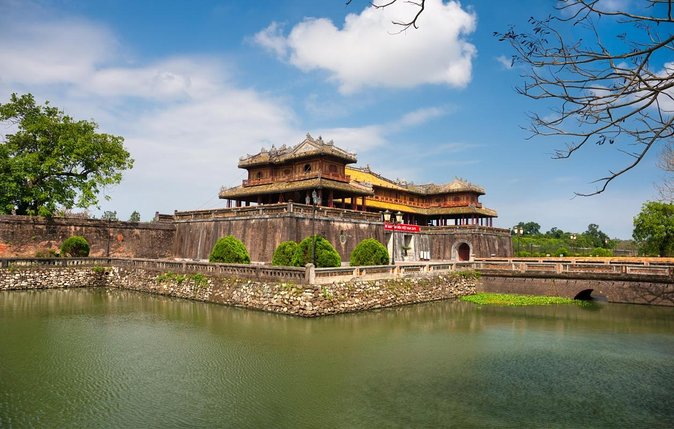
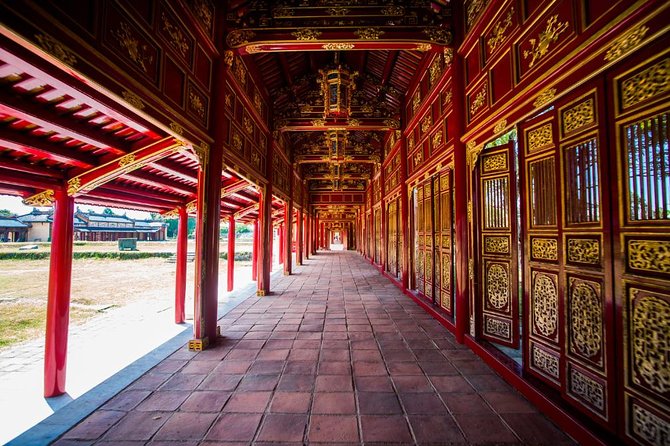
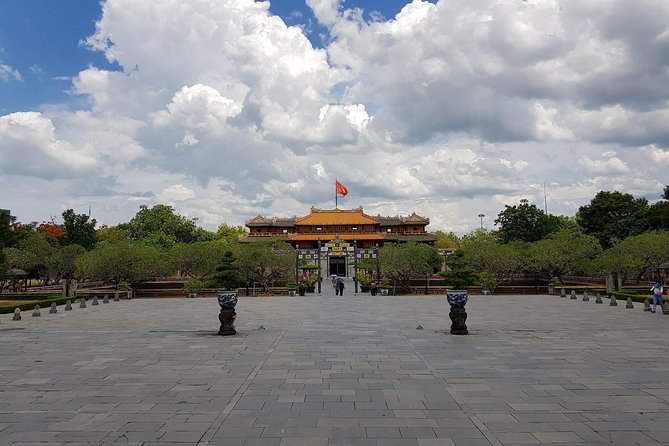
Next comes Hue Imperial City, sometimes described through three main areas: the citadel/protecting zone, the royal city (where the emperor’s world and officials worked), and the Forbidden City area (the emperor’s residence zone).
You’ll spend about 1 hour 30 minutes, and admission is included. This is one of the best segments for understanding how imperial power worked on the ground. Even if you’ve seen other citadels, Hue’s layout gives you a strong sense of separation—public vs. restricted areas, workspaces vs. residence spaces.
My advice: treat this stop as orientation. You don’t need to memorize everything. Just keep asking yourself: where would common people go, and where was access controlled? The guide’s explanation is what makes the stones feel logical instead of random walls.
Dong Ba Market: local life on the Perfume River north bank
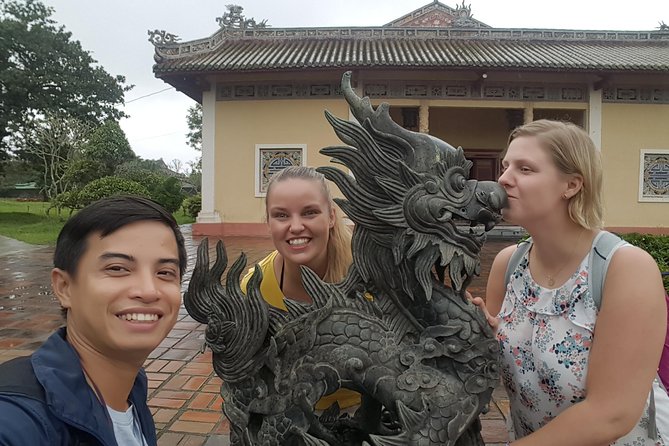
After royal walls, you head to the city’s daily heart at Dong Ba Market on the north bank of the Perfume River. This is a quick stop, around 25 minutes, with admission free.
The key thing to know is that this doesn’t feel like a souvenir circus. It’s described more like a tight community than a typical market you only visit for shopping. You can look for everyday goods, local food culture, and the small chaos of trade that makes a place feel real.
If you want value from this stop, do two simple things:
- Spend a minute observing before buying. You’ll understand what’s normal here.
- If you buy anything, expect that you might need a bit of patience and clear communication.
This is the kind of market stop I like most on a short trip: you get the vibe without losing half your day.
Minh Mang’s mausoleum: feng shui planning you can actually notice
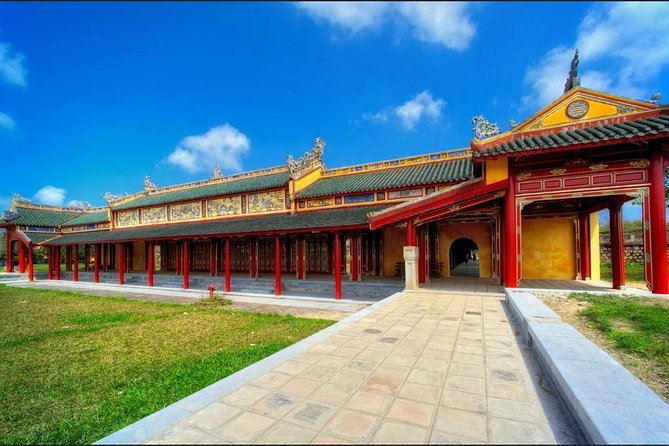
Then you move into royal afterlife architecture at the Mausoleum of Emperor Minh Mang. You’ll have about 45 minutes, and admission is included.
The highlight here is the approach to feng shui. The mausoleum layout is explained as being based on natural elements and careful planning by the second emperor of the Nguyen dynasty. That theme changes how you look at the grounds. Instead of seeing a tomb, you start reading it like a designed environment—paths, views, and placement.
I also like that this stop complements what you saw at the Imperial City. You’re going from power in life to power in spiritual permanence. It’s not only a building; it’s the emperor’s idea of how order should look.
Khai Dinh tomb: the most surprising architecture on the list
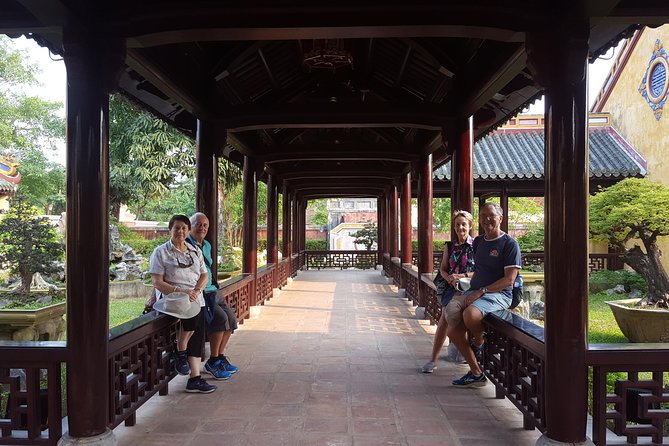
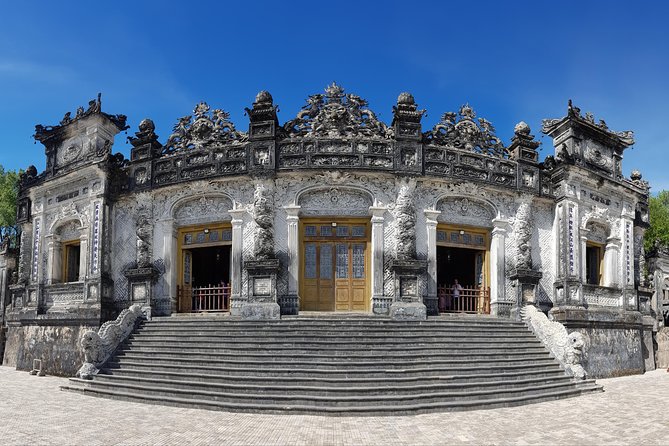
The day finishes with the Tomb of Khai Dinh, usually called one of the most expensive and beautiful tombs in the world. You’ll have about 35 minutes, with admission included.
This is the stop where Hue becomes visually different. Khai Dinh’s tomb is described as breaking from traditional Vietnamese custom, with a mixture of influences including Hinduism, Buddhism, Christianity, Vietnamese, and French architecture. In plain terms: you’ll see a blend that feels unusual compared to the smoother, more expected styles.
If you love details, this is where you’ll lose track of time—in a good way. Mosaics, carvings, and the way the tomb is styled create lots of photo angles, but the key is to pause and look slowly, not just shoot fast.
Lunch, foot bath moments, and the comfort details that add up
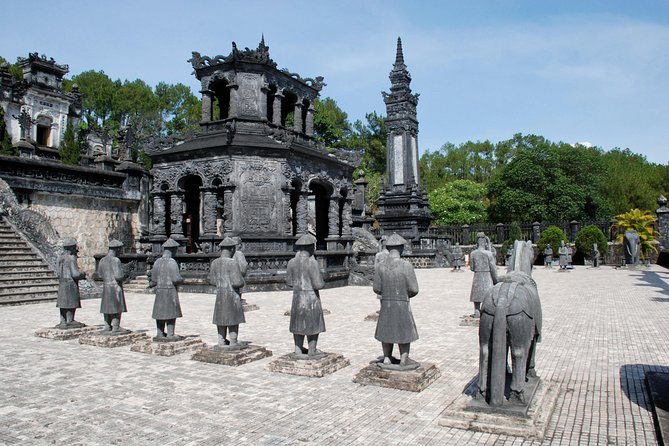
Lunch is included at a local restaurant, and the meal is described as 6 dishes. This is a real benefit on a day tour. Hue is not a place where you want to gamble with long lines or time-consuming meals when you’re already working within a schedule.
Some people also mention a foot bath at the end of lunch. That’s the kind of small comfort that makes a long sightseeing day feel lighter.
Outside of lunch, you’ll have the practical support stuff that keeps the day from feeling exhausting: air-conditioned transport, water, and wet tissues.
If you’re prone to heat fatigue, this tour is built in your favor because the long transfers are handled for you.
Price and logistics: is $55 good value?
At $55 per person, you’re buying a full day that bundles transport, guide time, included admissions at several major sites, and lunch. Compared with paying separate tickets, arranging your own transport between far-scattered attractions, and trying to line up a coherent route, this price can feel fair fast.
Here’s what’s clearly included:
- Lunch at a local restaurant (6 dishes)
- Air-conditioned vehicle
- All fees and taxes
- 2 bottles of water per person
- Wet tissues
- A dragon boat trip on the Perfume River
- An English-speaking guide
What’s not included:
- Drinks during lunch, personal expenses, and tips
One more logistics thought: since Thien Mu Pagoda admission is listed as free and other admissions are included, you don’t end up paying at every stop. That’s one less headache.
Who should book this Hue Daily Small Group Tour
This is a strong fit if:
- You want major Hue sights in a single day without planning.
- You like explanations with your photos, especially for the Imperial City and tomb contexts.
- You prefer a calm group size and don’t want to wait around for a large crowd.
It also works well for people staying near transit, since the tour is noted as being near public transportation, and pickup is offered.
You should consider something else if you dislike tight schedules or you know you get worn out by multiple outdoor sites in one day.
How to get the most out of the day (without overthinking it)
A few practical tips to help you enjoy the pacing:
- Wear closed, comfortable shoes. Grounds can be uneven around pagodas and tomb areas.
- Bring a light layer. Weather changes can happen, and you’ll be outside for long stretches.
- Have a charge-ready phone/camera. This route has multiple photo-heavy stops (Imperial City and Khai Dinh especially).
If it rains, at least one review notes it still felt fun. Just pack for the possibility and keep your plan flexible.
Should you book it?
I’d book this Hue Daily Small Group Tour if you’re doing Hue on a short schedule and want a route that tells a story: sacred beginnings, imperial control, everyday market life, then royal monuments that show how the Nguyen dynasty wanted to be remembered.
The best reasons to choose it are simple: small-group comfort, a guide who connects scenes to meaning, and included value like lunch, water, and the Perfume River dragon boat trip. The main downside is timing. If you’re the type who hates anything running longer than planned, go in with a relaxed mindset.
FAQ
How long is the Hue Daily Small Group Tour?
The tour lasts about 7 to 8 hours.
What is included in the price of $55 per person?
Lunch, an air-conditioned vehicle, all fees and taxes, 2 bottles of water per person, wet tissues, an English-speaking guide, and a dragon boat trip on the Perfume River are included.
Are entrance fees included?
Yes for most major stops. Thien Mu Pagoda admission is listed as free, while Hue Imperial City, Minh Mang tomb, and Khai Dinh tomb admissions are included.
How many people are in the group?
The maximum group size is 12 travelers.
Is pickup offered?
Yes, pickup is offered.
What stops are visited during the day?
You’ll visit Thien Mu Pagoda, Hue Imperial City, Dong Ba Market, the Mausoleum of Emperor Minh Mang, and the Tomb of Khai Dinh.
Do I need to be physically fit for this tour?
The tour notes a moderate physical fitness level. It includes multiple outdoor sites, so comfortable walking ability helps.