REVIEW · ISTANBUL
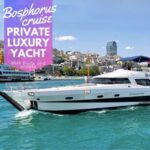
Afternoon Bosphorus Cruise Luxury Yacht with Professional Guide
Book on Viator →Operated by Yacht Cruises: Bosphorus · Bookable on Viator
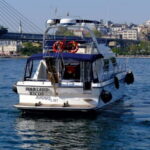
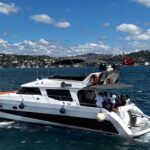
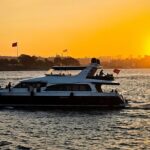
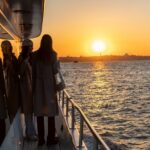
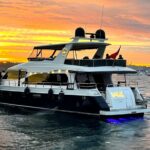
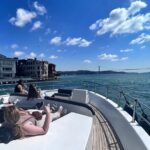
The Bosphorus looks different from a yacht. I love how a great guide turns big landmarks into clear storylines, and the ride comes with homemade mint lemonade plus cookies, baklava, and fresh fruit without feeling rushed. One thing to think about: this is a boat outing, so it’s not recommended if you get vertigo or seasickness, and it depends on good weather.
You’ll spend about two hours cruising and learning what you’re actually seeing—why the strait matters, how the palaces connect to the water, and where the skyline legends come from. Expect an intimate group (up to 30) and an English-speaking guide who keeps the stops organized so you don’t miss the details.
The only real trade-off is pacing. With so many famous names on the route, you’ll get strong viewing time from the water, but not long museum-style visits. If you want hands-on time inside palaces, you’ll need to plan a separate day for that.
In This Review
- Key highlights you should care about
- Why this Bosphorus cruise feels like Istanbul, not a checklist
- Getting out on the water: timing, comfort, and what the “2 hours” really means
- The Bosphorus: the “main character” under your feet
- Dolmabahçe Palace from the water: sultan power in waterfront form
- Çırağan Palace: marble luxury and the darker side of court life
- Ortaköy and its bazaar energy: where the cruise connects to everyday Istanbul
- Bosphorus Bridge from Ortaköy: the engineering that joined two worlds
- Rumeli Hisarı: a fortress built fast to control a narrow choke point
- Anadolu Hisarı: the counterpoint on the Asian shore
- Küçüksu Pavilion: Ottoman summer life, seen with the water as the backdrop
- Beylerbeyi Palace: a summer complex under the bridge
- Maiden’s Tower at Üsküdar: legend meets a tiny island
- Galata Bridge: where evening photos meet daily life
- Galata Tower: Genoese height, Ottoman uses, and a famous flight
- Drinks and snacks: the included comforts that make the cruise feel worth it
- Price and value: why $25.74 can make sense in Istanbul
- Who this cruise fits best (and who should skip it)
- A simple checklist before you go
- FAQ
- How long is the Bosphorus luxury yacht cruise?
- What time does the tour start?
- Is the tour in English?
- What food and drinks are included?
- Are alcoholic beverages included?
- Is there a restroom on board?
- What’s the group size?
- Where do I meet and where does it end?
- Do I need transfers from my hotel?
- What’s the cancellation rule if plans change?
- Should you book this Bosphorus luxury yacht cruise?
Key highlights you should care about
- A professional guide who explains what you’re seeing in plain language
- Mint lemonade, tea/coffee, fruit, and dessert served on board
- Bosphorus views that line up Europe and Asia at close range
- Major landmarks from the water: Dolmabahçe, Ortaköy, Beylerbeyi, Maiden’s Tower
- Golden Horn icons at the end: Galata Bridge and Galata Tower
- A small-group luxury feel for an easy, 2-hour commitment
Why this Bosphorus cruise feels like Istanbul, not a checklist
Istanbul can turn into a pile of photos if you don’t have context. This cruise keeps you moving along the Bosphorus with a guide who helps you read the skyline like a map. You get the “wow” factor of the water, but also the why: where Asia ends and Europe starts, why forts were built at bottlenecks, and how palaces were designed to face the strait.
You’ll also notice the practical side. There’s a restroom on board, and the included drinks aren’t an afterthought—homemade lemonade with fresh mint, plus water, tea, and coffee. That means you can stay comfortable while you watch the city slide by.
You can also read our reviews of more tours and experiences in Istanbul.


Getting out on the water: timing, comfort, and what the “2 hours” really means
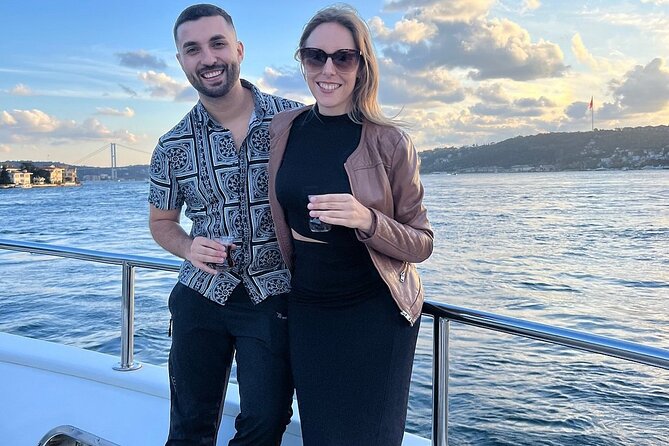
This runs for about 2 hours, starting at 1:00 pm. You meet at Türkiye Petrolleri Ömer Avni, Meclis-i Mebusan Cd. No:34, in Beyoğlu. The activity ends back at the same meeting point, so you’re not stuck with an awkward transfer plan afterward.
The group is capped at 30 travelers, which matters more than you’d think on a sightseeing boat. Smaller groups usually mean less crowding at the best photo angles and fewer delays when the guide calls you back for the next viewpoint.
The main comfort note is simple: if you’re sensitive to motion, take it seriously. The tour isn’t recommended for vertigo or seasickness, and the Bosphorus is open water enough that you may feel a swell depending on conditions. Also, good weather is required, so plan a flexible day.
The Bosphorus: the “main character” under your feet
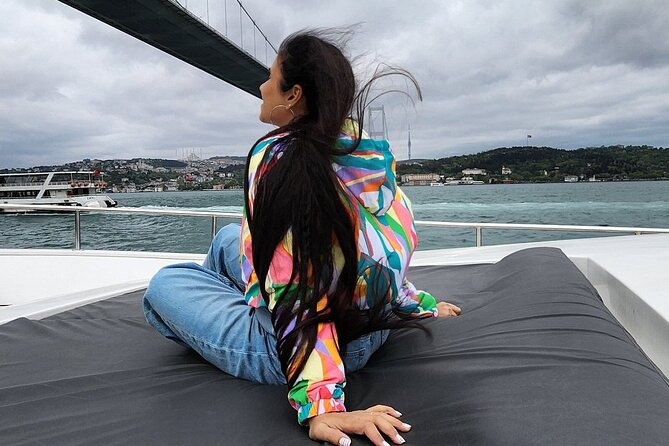
The guide starts by framing the Bosphorus—an international strait that separates the European and Anatolian sides and connects the Sea of Marmara to the Black Sea. It runs roughly northeast-southwest and is about 30 kilometers long.
What I find useful here is learning the physical logic of the waterway:
- Surface currents generally flow from the Black Sea toward the Marmara.
- Deeper water currents can move the other way.
- Depth is around 60 meters on average, with points going down to 120 meters.
- Width varies widely, with the widest stretch up to about 3,500 meters.
You don’t need to memorize those numbers, but it changes how you watch shipping lanes and how you think about why the Ottomans and others cared so much about controlling this corridor. When the guide links forts and palaces to the strait’s narrow points and busy traffic, Istanbul suddenly makes sense.
Dolmabahçe Palace from the water: sultan power in waterfront form
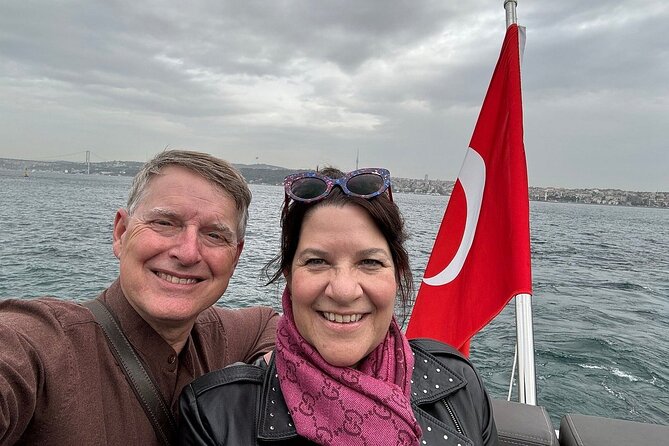
Next, you’ll see Dolmabahçe Palace, an Ottoman palace complex in Beşiktaş by the Bosphorus. It sits on a large area (about 250,000 m²) and faces the strait—so you’re viewing it the way the sultans likely wanted it: with water as the front yard.
From the boat, you’ll get a sense of scale without needing to enter. The location is also important: Dolmabahçe is on the left bank at the entrance to the Bosphorus from the Sea of Marmara, opposite Üsküdar and Kuzguncuk.
Why this stop works on a cruise: palaces that face the water were designed for display and movement. On land, you might miss the “why.” From the Bosphorus, you can see how the residence relates to the journey—ships arriving, ceremonial movement, and the symbolic pull of the strait.
Çırağan Palace: marble luxury and the darker side of court life
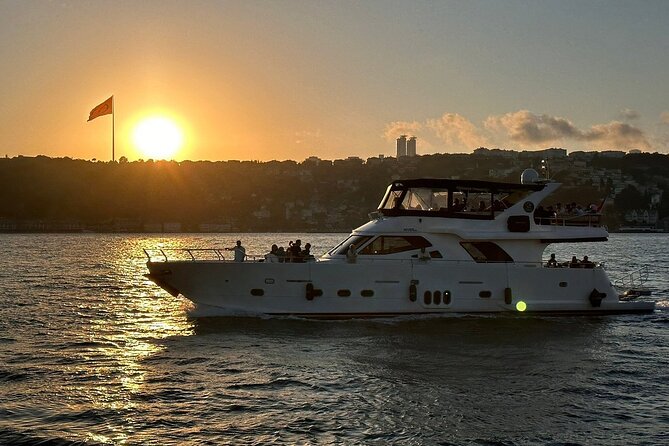
You’ll also pass Çırağan Palace. Commissioned by Sultan Abdulaziz and designed by Sarkis Balyan, it was completed in 1871 and built of marble over about 80,000 m².
This stop isn’t just about architecture. Çırağan carries a heavy story: after Abdulaziz was deposed, he was imprisoned here with his family. The same fate happened later to Murat V, who spent decades there after being deposed.
Even if you’re only seeing it from the water, this detail matters because it changes how you interpret the beauty. A waterfront palace isn’t only comfort—it can be a controlled space. The guide keeps that balance, so you don’t end up with a one-note view.

Ortaköy and its bazaar energy: where the cruise connects to everyday Istanbul
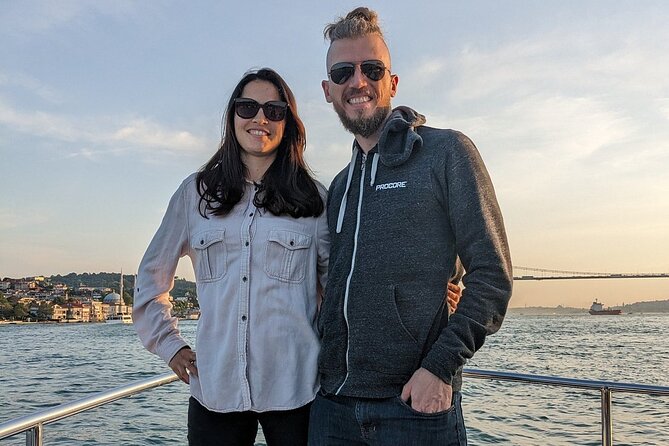
Then comes Ortaköy, on the European side of the Bosphorus, in Beşiktaş. Ortaköy is known for its slopes down toward the coast, plus its bazaar area filled with souvenir shops and cafes.
On a cruise, you don’t need to wander for hours to feel the neighborhood vibe. You’re getting a front-row look at the mix of everyday life and Bosphorus scenery. The Ortaköy bazaar is described as lively through the day, with momentum starting after about 10:00 am—so if you’re doing this at 1:00 pm, you’re right in the active window.
This stop is also a good contrast point. After palaces and imperial architecture, you get something more human: small businesses, casual dining, and a skyline that feels lived-in.
Bosphorus Bridge from Ortaköy: the engineering that joined two worlds
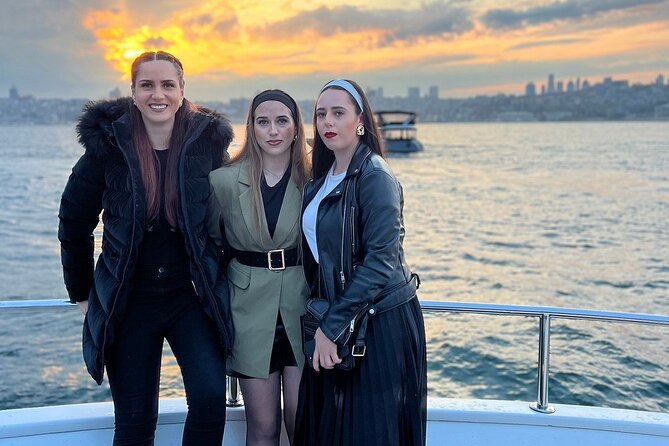
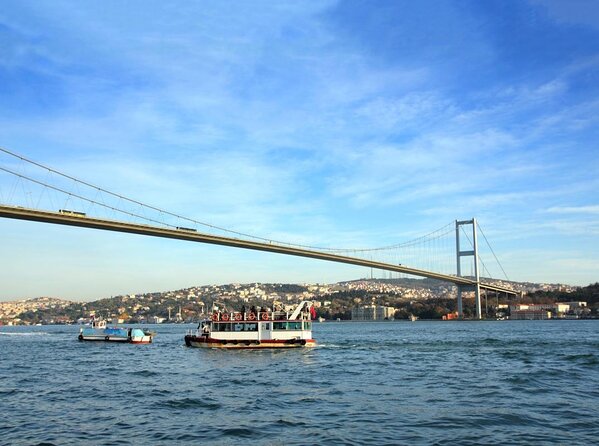
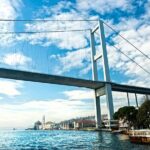
You’ll pass the feet of the Bosphorus Bridge in Ortaköy (with the other end in Beylerbeyi). This is one of the two suspension bridges across the strait.
The bridge story is unusually connected to national milestones. Construction began in 1970, and it opened on 29 October 1973, marking the Republic’s 50th anniversary. The guide also explains that it’s the first bridge built on the Bosphorus, which is why it’s such a key transportation link.
One practical tip: this is a prime photo moment, because you can frame Istanbul’s skyline with a moving water background. It’s also a spot associated with the Istanbul Eurasia Marathon, which hints at how the city uses this crossing beyond commuting.
Rumeli Hisarı: a fortress built fast to control a narrow choke point
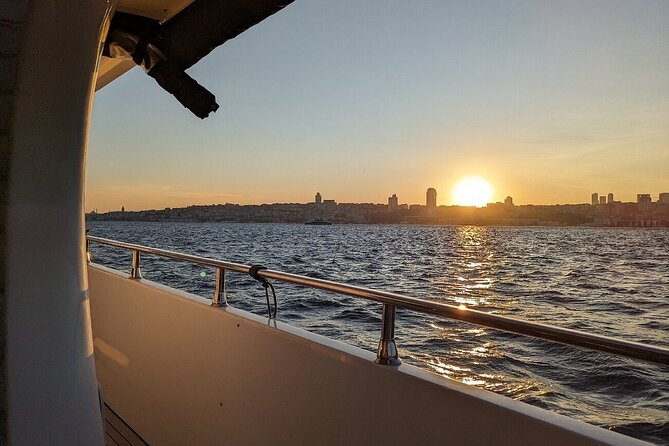
As you move along the strait toward the Rumeli side, you’ll see Rumeli Fortress (Rumeli Hisarı) in Sariyer. It sits directly across from Anadolu Hisarı, and it was built at the narrowest point of the Bosphorus.
The construction began in 1453, ordered by Sultan Mehmed the Conqueror, and it’s known for speed—completed in just three months. That timing tells you the urgency: this wasn’t a decorative project. It was meant to protect against naval attacks, then later to inspect maritime traffic.
From the cruise vantage point, the fortress becomes easier to picture. You can see the strategic idea: place the defense across the water from the opposing fort, then control the flow between seas.
Today, the fortress grounds also serve the public in a different way. The area inside was restored and became famous for summer concerts, operating as an open-air theater and museum. On your boat, you’re seeing the same setting that now hosts music and events.
Anadolu Hisarı: the counterpoint on the Asian shore
You’ll then look toward the Asian side at Anadolu Fortress (Anadolu Hisarı) in Beykoz, also at the Bosphorus’s narrowest point. It was built in 1395 by Beyazıt I and includes a citadel plus exterior castle walls.
After the conquest of Istanbul, it lost some strategic importance and was converted into a military hospital. Over time, nearby settlements grew, so today you see waterfront houses and older mansions spread among the ruins.
There was a restoration period from 1991 to 1993, and it was converted into a museum. However, it’s described as not open to the public, with only outer areas accessible. On the cruise, you’ll mostly take in the visual rhythm—walls, waterfront homes, and the feeling of a fort that’s been surrounded by centuries of daily life.
Küçüksu Pavilion: Ottoman summer life, seen with the water as the backdrop
Next, your guide points out the Küçüksu Pavilion museum area. Ottoman emperors used it as a summer palace and a hunting lodge, so the mood here shifts from fortress defense to leisure and ceremony.
I like this stop because it reminds you that the Bosphorus wasn’t only about control. It was also about comfort. When emperors pick a waterfront retreat, they’re choosing the view, the air, and the convenience of travel by water.
On a boat, you’re not touring rooms. You’re getting the “why” through location—how a pavilion like this is positioned for maximum sightlines over the strait.
Beylerbeyi Palace: a summer complex under the bridge
You’ll see Beylerbeyi Palace next. It’s an Ottoman summer palace complex built in the 1860s on the Bosphorus shores, right under the Bosphorus Bridge.
Designed by Sarkis Balyan, it combines stylistic influences from both East and West, including renaissance and baroque elements. Structurally, the main building is two-store stone construction on a high basement, with a rectangular footprint of about 2,500 m².
The guide also notes the internal layout: the south side as Imperial Mabeyn and the north side as Valide Sultan’s Apartment. It’s described as having 6 halls, 24 rooms, plus a hamam and a bathroom. From the water, you’ll focus more on the exterior design and the setting, but this kind of detail helps you understand the building wasn’t just one royal room—it was a functional complex.
Don’t skip the visual cues the guide highlights: the lily pond and large garden are part of the palace’s charm. From the Bosphorus, these features give the building a softer edge against the busy waterway.
Maiden’s Tower at Üsküdar: legend meets a tiny island
Then comes the most recognizable “skyline” icon: Maiden’s Tower (Kız Kulesi). It sits on a tiny island about 200 meters from Üsküdar shore. Even if you’re not a legend person, the tower’s position makes it unforgettable.
The most popular story involves an oracle predicting that a sultan’s daughter would die of snake bite on her 18th birthday. To protect her, the tower was allegedly built so she could live in secrecy away from the mainland. On her birthday, she received a basket of fruit—where a snake was hidden—and the prophecy came true.
What matters for your cruise experience is how the legend is tied to the tower’s isolation. When you see it from the water, you understand why people kept telling stories around it.
Galata Bridge: where evening photos meet daily life
After the Bosphorus landmarks, you get views connected to the Golden Horn, including the Galata Bridge (Galata Köprüsü). Its history goes back to 1845, and it’s gone through changes, including a fire in 1992 followed by construction of the new bridge. The old bridge was moved to Halic.
Galata Bridge matters because it’s part travel infrastructure and part public stage. The area below features restaurants, cafes, and hookah lounges, while the tramway and pedestrian traffic run above. It’s also described as a top picture spot in the evening, with fishing and peddlers adding movement.
From the cruise perspective, you don’t need to stay long to feel why the bridge is so loved. The guide’s framing helps you see it as a living corridor, not a background monument.
Galata Tower: Genoese height, Ottoman uses, and a famous flight
Finally, your cruise view includes the Galata Tower, a nine-story tower built by Genoese in 1348. It’s about 66.90 meters tall and was the tallest building in the city at the time.
In the Ottoman era, it served multiple roles, including a fire observatory and a jail. One of the most famous moments tied to the tower is 1632, when Hezarfen Ahmet Çelebi reportedly glided across the Bosphorus to Üsküdar using wings he built himself.
The tower’s roof was destroyed during a storm in 1875 and wasn’t restored in the Ottoman era. In the 1960s, the conical cap was restored and the wooden interior was replaced by concrete. Today, the tower is open to the public and has a restaurant and café on the upper floor.
Even if you’re just seeing it from a distance, this stop gives you a final thread: Istanbul’s skyline is shaped by different empires, but the city still uses the spaces for everyday enjoyment—food, views, and stories.
Drinks and snacks: the included comforts that make the cruise feel worth it
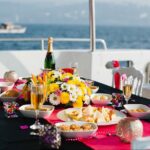
This is where the tour quietly earns its value. You get restroom on board, plus complimentary drinks: homemade lemonade with fresh mint, water, tea, and coffee. That’s a real comfort on a city cruise, especially when you’re out for about two hours.
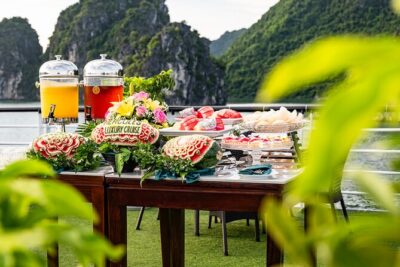
Food is included too: a daily prepared fresh seasonal fruit plate, plus cookies and baklava served aboard. I like that the snacks don’t feel random. Baklava and lemon-mint drinks are a natural fit for Istanbul, and the fruit helps balance the sweetness.
One note: alcoholic beverages aren’t included. If you want wine or beer, plan on purchasing it separately elsewhere.
Price and value: why $25.74 can make sense in Istanbul
At $25.74 per person, this cruise competes well with the cost of many single-attraction tours in Istanbul. You’re not paying just for scenery. You’re paying for a package that includes:
- Two hours on a yacht
- A professional guide in English
- On-board restroom
- Drinks and snacks
That mix is what makes it practical. You don’t have to buy food for the time window, and you don’t have to arrange transportation from one major view to the next. In a city where time and energy vanish quickly, this is a good “use your afternoon” option.
If you’re traveling with limited time, it’s also a smart way to see both sides of the Bosphorus’s story—from imperial palaces to modern bridges and the Golden Horn.
Who this cruise fits best (and who should skip it)
This tour suits you if you want:
- A guided Bosphorus view without walking for hours
- A small-group feel (max 30)
- Included comfort like restroom access and real snacks
- English commentary that helps you interpret famous landmarks
You might want to skip or reconsider if:
- You get motion sickness or have vertigo concerns
- You want long museum entry time inside palaces and forts (this is mainly viewing from the water)
- You’re traveling at a time when weather is unpredictable and you can’t adjust
A simple checklist before you go
- Dress for cool wind off the water and layers you can adjust.
- Bring sunglasses and a light jacket even in warmer months.
- If you’re sensitive to motion, take that seriously before boarding.
- Have your camera ready for bridge-and-tower framing moments.
- If you plan to explore afterward, use Ortaköy as your easy next step since it’s on the European side.
FAQ
How long is the Bosphorus luxury yacht cruise?
It lasts about 2 hours.
What time does the tour start?
The start time is 1:00 pm.
Is the tour in English?
Yes, it’s offered in English.
What food and drinks are included?
You get complimentary drinks (homemade lemonade with fresh mint, water, tea, and coffee) and on-board snacks including fresh seasonal fruit, cookies, and baklava.
Are alcoholic beverages included?
No. Alcoholic beverages are not included.
Is there a restroom on board?
Yes, there is a restroom on board.
What’s the group size?
The tour has a maximum of 30 travelers.
Where do I meet and where does it end?
You meet at Türkiye Petrolleri Ömer Avni, Meclis-i Mebusan Cd. No:34, 34427 Beyoğlu/İstanbul, Turkey, and the tour ends back at the meeting point.
Do I need transfers from my hotel?
Transfer services are not included.
What’s the cancellation rule if plans change?
You can cancel up to 24 hours in advance for a full refund. If it’s canceled due to poor weather, you’ll be offered a different date or a full refund.
Should you book this Bosphorus luxury yacht cruise?
If you want an efficient, high-comfort afternoon with a guide who explains what you’re seeing, I think this is a strong book. The included drinks and desserts make the time feel complete, and the route covers Istanbul’s most photogenic Bosphorus and Golden Horn icons without draining your energy.
Just be honest about two things: motion sensitivity and weather. If those are manageable for you, this cruise is a very good value way to experience Istanbul from the water.