REVIEW · PORT MORESBY
ADVENTURE KOKODA 10-Day Premium Kokoda Campaign Trek Australian Led
Book on Viator →Operated by Adventure Kokoda · Bookable on Viator
Dawn at Isurava changes your whole day. This premium Kokoda experience leans hard into the human story, with the Dawn Service at Isurava Memorial that’s widely treated as the emotional highlight. And it gives you a memorable payoff at Lake Myola, including time at Bombers campsite and a chance to inspect the crashed American P40 Kittyhawk near the northern edge of the lakes.
What makes it feel like a real package is how tightly it’s run: small group size (max 15), daily briefings, and a setup that handles most of the heavy lifting—gear, logistics, permits, even emergency comms. You also get pre- and post-trek hotel time in Port Moresby (twin-share), plus fresh meals cooked on the trail by a PNG boss cook.
Big consideration: this is not a casual walk. You need strong physical fitness, you’ll be up early most days, and camp life is basic by design—one review also hinted the food may not match the hype, so set expectations for hearty trail meals, not restaurant quality.
In This Review
- Key points worth knowing before you go
- Why this premium Kokoda trek feels different
- Port Moresby setup: Sogeri Lodge, briefing rhythm, and turning up ready
- The wartime trail, day by day: from McDonald’s Corner to Imita Ridge
- Mogolonumu and Ladavi Saddle: Mogolonumu to Nauro Lookout
- Efogi, the Moss Forest, and the Bombers base for Myola
- High passes and long views: Mt Bellamy junction, Kokoda Gap, Vabula Ridge
- Isurava Memorial dawn: the moment you won’t forget
- Finishing at Kokoda: Hoi to Kokoda and the closing briefings
- Safety, permits, and the logistics that protect your energy
- The real value of the $3,443 price tag
- Meal and comfort expectations: what to plan for
- Who this trek suits best (and who should think twice)
- Should you book Adventure Kokoda?
- FAQ
- FAQ
- How long is the trip overall?
- Where does the tour start and end?
- What’s included for safety and navigation?
- Are meals and accommodation included?
- Do I need to arrange my international flights?
- Is anti-malarial medication included?
- What’s the maximum group size?
- What’s the cancellation window?
Key points worth knowing before you go
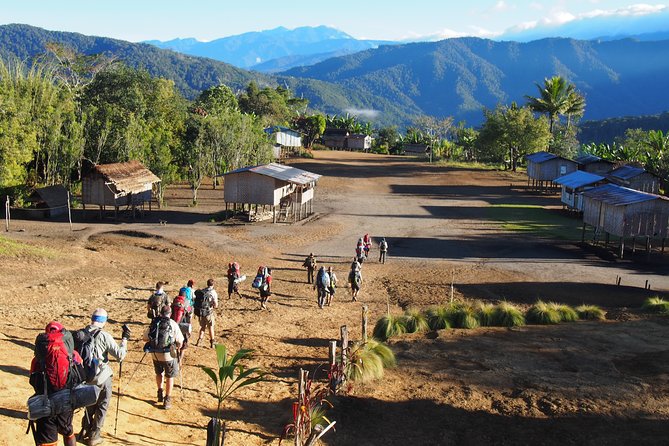
- Isurava Dawn Service is treated as the highlight, with trekkers plus PNG guides and carriers at the memorial.
- Bombers campsite + Lake Myola includes time to explore Myola 1 and Myola 2 and inspect the P40 Kittyhawk wreck.
- Specialist battlefield leadership can include an Australian expedition leader who ties the route to what happened on the ground.
- Safety and comms are built-in with satellite phone, two UHF radios, and a 24-hour link back to Port Moresby.
- Small group trekking (max 15) helps keep the pace manageable and the briefings more personal.
Why this premium Kokoda trek feels different
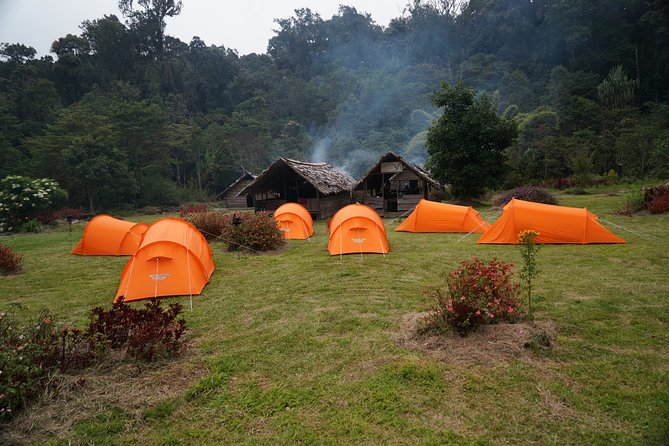
Kokoda is already “big.” What you’re buying here is structure. You’re not just paying for walking days. You’re paying for the parts that keep a 10-day jungle campaign trek from becoming chaotic: daily briefings, the right permits, the right gear, and a real chain of support.
This route follows the wartime trail and hits the places that matter: battle sites, patrol tracks, key logistic areas, plus major features like Lake Myola and the fire support base areas. That matters because Kokoda isn’t only about effort; it’s about understanding why you’re stepping where you’re stepping.
And you do get moments that feel different from the standard “hike and move on” style. The itinerary includes time for reflection (Dawn Service), and it also gives you a lighter, human-scale break with a make-and-mend afternoon in the Moss Forest—plus a camp base at Bombers for real recovery time.
Port Moresby setup: Sogeri Lodge, briefing rhythm, and turning up ready
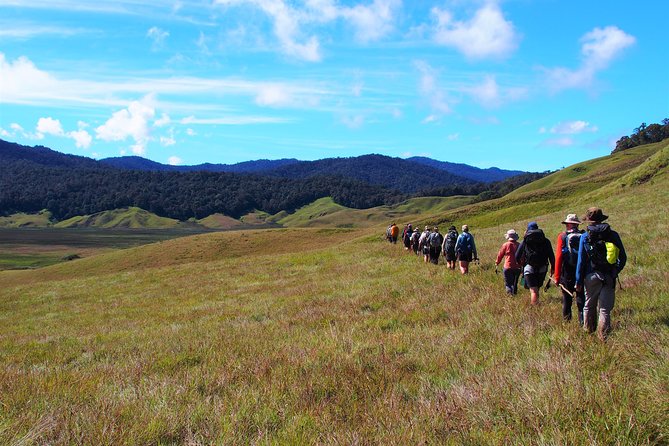
Day 1 is a classic entry ramp: arrive Port Moresby, check into Sogeri Lodge, then get your briefing and dinner with the group. This is when you should get your bearings and make sure your kit is sorted for the track days ahead. Your trek leader and local team go over what to expect, which is useful because the Kokoda Trail is a mix of steep climbing, long days, and constant navigation through rough terrain.
If you’re the type who hates feeling unprepared, this is a win. The schedule is built to help you start walking on Day 2 without the confusion that can happen when people arrive in-country and try to “figure it out.”
You also get a visit to Bomana War Cemetery as part of the included program. That gives context before the trail begins, and it sets a respectful tone that matches the solemn moments later at Isurava.
The wartime trail, day by day: from McDonald’s Corner to Imita Ridge
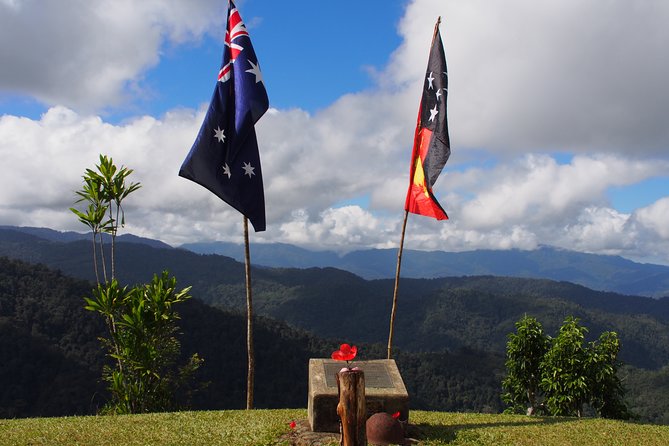
Days 2 and 3 are your orientation and your first real test of the day’s rhythm.
On Day 2, you travel by bus from Sogeri Lodge toward the early trail points. You stop at McDonald’s Corner, inspect the monument there, then continue to Owers Corner. This is where you meet the guides and porters and get your first hands-on connection with what’s ahead—down to inspecting a 25-pound artillery gun relocation detail at Owers Corner. Expect to feel small in the jungle, but also start to get your mental map.
Day 3 ramps up fast with the wartime route through the Golden Staircase and a climb to Imita Ridge (860m). You’ll inspect weapon pits tied to the Brigade position and see why the ridgeline is often described as a fortress-like setting. If you’ve ever wondered how the “ground” of a battle can shape tactics, Imita Ridge is a place where that clicks.
Practical note: the higher ground days are not about speed. They’re about steady effort, pacing, and listening to your body. The daily briefings help, because you’re not just hiking blindly—you’re hiking with meaning.
Mogolonumu and Ladavi Saddle: Mogolonumu to Nauro Lookout
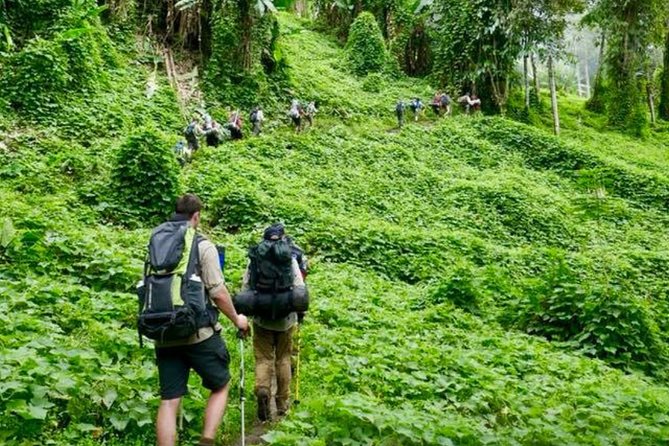
Day 4 is a grind climb to the crest of the Maguli Range, known as Mogolonumu (1,335m AMSL). You’ll deal with false ridges along the way, so it’s not a straight line upward. The payoff is breakfast at Banana Camp and wide views as you gain elevation. The itinerary also includes inspection of Japanese delaying positions—again, tying your steps to what happened in that exact terrain.
Day 5 heads toward Hehomuri Creek (described as known as 5 Creeks?) at the base of the Ladavi Saddle (760m). Then comes a sharp climb to Nauro Lookout (1,035m). This is a “get your breath back, then keep going” moment. After that, you continue toward Menari Gap in the Ladavi Saddle area. If you’re thinking Kokoda is all steep rock and big climbs, this middle stretch reminds you it’s also about transitions—creek crossings, saddles, and the way a ridge forces movement.
What I like about the way this trek is structured: the climbs are spaced with intentional stops. That reduces the risk of people burning out early because they don’t know where they’ll land for a rest.
Efogi, the Moss Forest, and the Bombers base for Myola
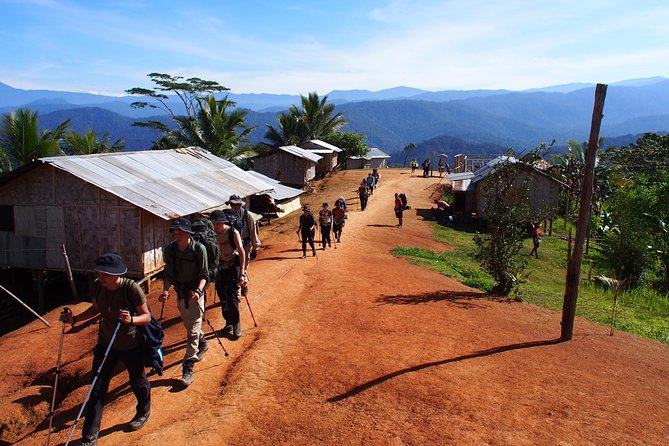
Day 6 takes you from Kavai Creek (down briefly, then up) to Efogi 2 Village (Laununumu) at 1,385m. You’ll inspect a Japanese monument erected by Corporal Nishimura. This is the kind of stop that changes how you view the trail—not because it’s dramatic on the surface, but because it’s precise. It’s anchored to people and named actions, not vague “war story” talk.
Day 7 shifts into the Moss Forest and moves you toward Lake Myola. The itinerary has you reach the edge of Lake Myola 1 and then cross to the edge of the climb to Lake Myola 2. Lake Myola 2 is described as a prairie-like extinct volcanic crater discovered by Captain Bert Kienzle. That’s a detail worth remembering because it helps you see Myola as more than a battlefield landmark. It’s also a specific geological setting.
Here’s where the premium touches pay off: the overview notes two nights at Bombers campsite, giving you time to explore rather than rush. One of those days includes inspecting the crashed American P40 Kittyhawk on the northern edge of the lakes. That’s one of those rare “you are here” moments where history isn’t just described—it’s physically present.
Also included is a make-and-mend afternoon in the Moss Forest back at Bombers. It’s a break from pure marching, and it helps you reset mentally. On a trek like this, small recoveries matter.
High passes and long views: Mt Bellamy junction, Kokoda Gap, Vabula Ridge
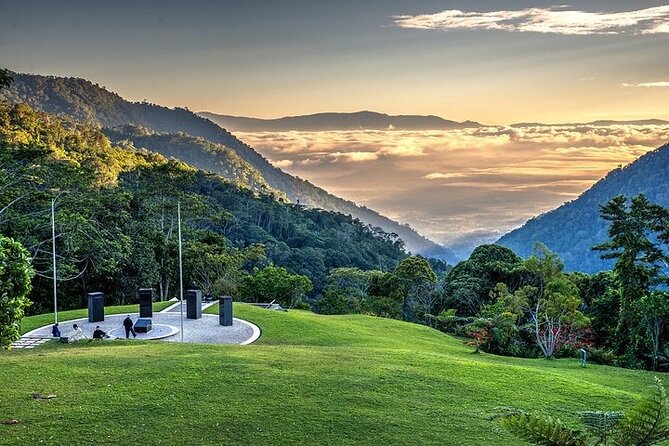
Day 8 climbs via the track cut by Captain Kienzle to the main Mt Bellamy track junction at 2,245m. You then continue down to Kokoda Gap at 2,190m with extensive views down toward the Yodda Valley on the northern side. The way this route is set up makes those views feel earned—your legs carry you, and your mind finally gets a panorama.
Day 9 continues with morning tea at Vagebau Creek (1,895m), then a short trek to the crest of Vabula Ridge (1,905m). From there it’s down to a delaying defensive position occupied by the 2/14th–2/16th battalions. This is another example of why the briefings matter. The trail isn’t only terrain. It’s a timeline.
One practical takeaway: when you’re at ridge tops, your energy often spikes because of the views. That’s a nice feeling, but don’t let it trick you into going too fast on the descent.
Isurava Memorial dawn: the moment you won’t forget
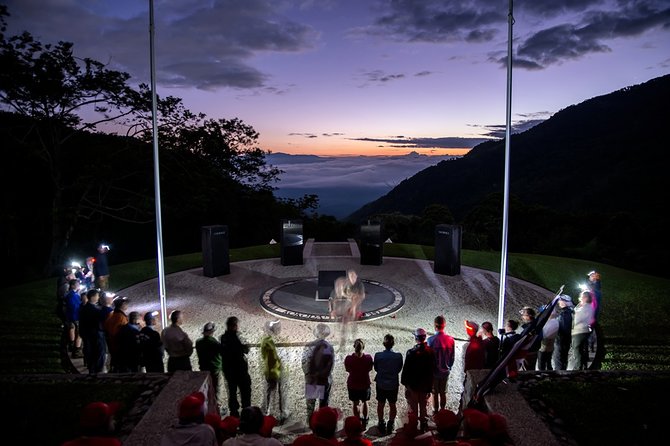
Day 10 is special in both schedule and tone.
You rise early (0430 reveille) and then have the Dawn Service at the Isurava Memorial at 0500. The service includes trekkers plus your PNG guides and carriers. It’s regarded as the highlight of the Kokoda trek experience, and it’s easy to see why. Dawn has weight. On Kokoda, it also adds a layer of shared presence that turns walking into remembrance.
After the service, the trek continues to Isurava Village (1,360m) via Etume and Ilole creeks for morning tea. Then you continue down toward the next sections of the route toward Kokoda.
If you’re choosing this trek over a more basic option, this is where the premium feels real. You aren’t just doing the miles. You’re participating in a ritual built into the campaign trail.
Finishing at Kokoda: Hoi to Kokoda and the closing briefings
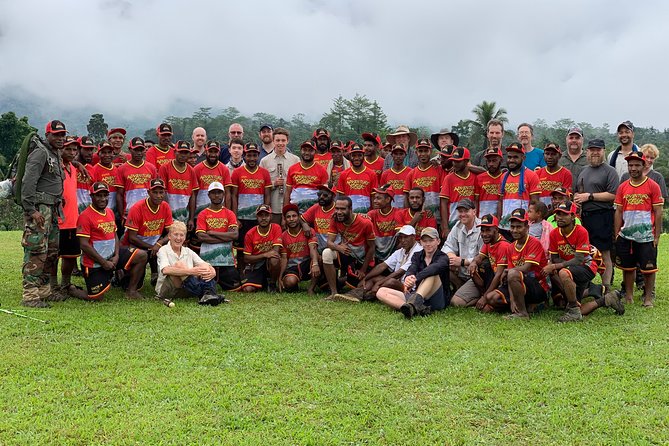
Day 11 starts with a daily briefing and moves you from Hoi to Kokoda (395m) via Kovello. You inspect the plateau where the 39th Militia Battalion first met the Japanese. There are also wartime briefings about the two battles for Kokoda, plus inspection of monuments and memorials.
This is the “slow down and take it in” day. When you reach Kokoda, the altitude drops and your body may feel like it’s finally exhaling—but your mind tends to catch up late. That’s normal. Let it happen.
Day 12 brings the transition back to Port Moresby: reveille at 0600, check out of Sogeri Lodge at 0900, then check in at the airport around 1100. You finish back at the meeting point.
Safety, permits, and the logistics that protect your energy
This trek is packed with support details that you’ll notice more when things get hard.
- Trek leader + local carrier team: You’re not doing the heavy-carrying by yourself. Group trekking gear includes safety ropes, machetes, shovels, tarpaulins, and more.
- Your own tent system: You get a personal mosquito proof tent per trekker. Guides carry it, then erect, dismantle it for you. That’s a big comfort win because it reduces daily setup stress.
- Emergency comms: Satellite phone, two UHF radios, and a 24-hour rear link to Port Moresby. This matters on a remote route where help is not instant.
- Official permits and mapping: You get an official Kokoda Track Authority trek permit and a 1:50,000 topographic map.
- First aid: A group first aid kit with trained first aid support is part of the package.
Also, small but useful: you get a Kokoda Certificate of Achievement, a polo shirt, and even a Paddy Pallin 15% discount on trekking gear and clothing.
Even if you consider yourself experienced, this kind of built-in safety and planning is what keeps the trip from turning into a scramble.
The real value of the $3,443 price tag
Yes, $3,443 is a lot of money. But look at what’s included and ask what you’d have to pay for separately if you tried to DIY it:
- PNG pre- and post-trek accommodation and meals (twin-share hotel and trail meals)
- Village and campsite fees
- Vehicle transfers in PNG
- Daily trekking leadership and specialist battlefield/historical guidance
- Group equipment and safety gear
- Satellite and UHF emergency communications
- Official permit and topographic map
- Dawn Service at Isurava Memorial
- A private charter flight between Port Moresby and Kokoda
The biggest value driver is the combination: leadership + permits + safety + logistics + meals. That’s what turns Kokoda from a hard project into an organized journey.
The only part you still need to handle is what’s not included: international flights to/from Port Moresby, passport, travel insurance, and personal items. Anti-malarial medication also isn’t included; you’ll need to follow what your doctor recommends.
Meal and comfort expectations: what to plan for
The trek includes fresh meals on the trail, hygienically prepared and cooked by the PNG boss cook. You also get breakfast and dinner counts across the days, plus lunch during the trek period.
That said, one review mention suggests food may not match the advertised standard. So here’s my practical advice: treat meals as fuel that keeps you moving, not as a dining experience. Bring your own comfort snacks if that would calm you down, and focus on hydration and rest during your stops.
Comfort-wise, your biggest daily win is the mosquito proof tent setup handled for you. That saves time and hassle when you’d rather be sleeping.
Who this trek suits best (and who should think twice)
This experience is for people with strong fitness and a serious interest in the meaning of the campaign. The route hits major ridgelines and passes, with early starts and long days, so you should be ready for physical strain.
It also suits you if you want history tied to place—battle sites, patrol tracks, logistic areas, plus named memorial points—without having to research every site yourself.
If you’re looking for a lightweight nature stroll with minimal structure, this probably isn’t your best fit. Kokoda is demanding, and the solemn moments are part of the design.
Should you book Adventure Kokoda?
If you want Kokoda with leadership, structure, and a strong emphasis on remembrance, I think this is a smart choice. The Isurava Dawn Service timing and inclusion, the Bombers campsite/Lake Myola segment with the P40 Kittyhawk inspection, and the built-in safety communications are three big reasons.
Book it if:
- you have the fitness level for a 10-day campaign trek
- you want an Australian battlefield/historical guide experience
- you appreciate strong logistics: maps, permits, first aid, comms, and meal planning
Skip it (or look for another style) if:
- you’re not prepared for early starts and sustained climbing
- you expect food to feel like a restaurant experience
- you’re trying to travel without medical planning, since anti-malarials are not included
FAQ
FAQ
How long is the trip overall?
The itinerary is about 12 days total, including setup in Port Moresby and the return day, with a 10-day premium Kokoda campaign trek on the track.
Where does the tour start and end?
It starts at Jacksons International Airport in Port Moresby, and it ends back at the same meeting point.
What’s included for safety and navigation?
You get emergency communications (satellite phone and UHF radios with a 24-hour link), a group first aid kit, and an official Kokoda Track Authority trek permit plus a 1:50,000 topographic map.
Are meals and accommodation included?
Yes. You have pre- and post-trek twin-share hotel accommodation and meals in PNG, plus fresh trail meals cooked hygienically by the PNG boss cook.
Do I need to arrange my international flights?
Yes. International flights to and from Port Moresby are not included.
Is anti-malarial medication included?
No. Anti-malarial medication is not included, and you’ll need to get it as prescribed by your doctor.
What’s the maximum group size?
The tour has a maximum of 15 travelers.
What’s the cancellation window?
You can cancel for free up to 24 hours in advance for a full refund.